Thank you for your interest in our Surgical Critical Care and Acute Care Surgery Program!
The Surgical Critical Care and Acute Care Surgery Fellowship at the University of Wisconsin-Madison is a 2-year fellowship with 1 position annually. The first year consists of an ACGME-accredited Surgical Critical Care Fellowship Program. The second year consists of an American Association for the Surgery of Trauma accredited Acute Care Surgery program. The program is an outstanding training program for those who want a comprehensive and immersive two years designed to impart maximal education. Our program offers a dynamic blend of clinical experience, research opportunities, and academic mentorship. Fellows are able to hone their skills in managing some of the most complex surgical cases including solid organ transplants, extracorporeal device support, and burns. During the first year, all of the rotations occur at UW Hospital, which is an ACS-verified Level 1 trauma center, Verified EGS Center, and ABA-certified Burn Center. During the second year, rotations occur at UW Hospital and multiple hospitals in the region.
Our Greatest Strengths:
- Broad exposure to advanced critical care and acute care surgery
- Comprehensive weekly curriculum with interdisciplinary collaboration
- Strong partnerships with other critical care programs, nursing, pharmacy, and allied health professionals
- Faculty mentorship and investment in long term career development for fellows
- Multidisciplinary faculty and staff from diverse training and research backgrounds
- Ability to function as faculty member during the ACS 2nd year
- Specialization pathways in research, global surgery, or systems management
Surgical Critical Care and Acute Care Surgery Fellowship
Why Choose Wisconsin Surgical Critical Care and Acute Care Surgery?
The UW-Madison Department of Surgery Surgical Critical Care and Acute Care Surgery Fellowship program offers excellent opportunities to fellows that sets us apart from other programs. Learn why our faculty and fellows chose Wisconsin Surgery below.
“If you are considering coming to this program, you are going to get a good, well-rounded critical care education. You are going to have time for educational opportunities as well… You are also going to have a good group of supportive faculty that are willing to help you not just with your education but are involved in helping you succeed overall in life. That includes career planning and helping you figure out where to go next.”
-Dr. Maryia Kochubey, 2024 program graduate“My favorite part of my fellowship year was being able to work with providers from the Department of Surgery, the Department of Anesthesiology, and the Department of Medicine in order to take care of very complex patients… I was really impressed with the willingness and ability of providers from a number of different specialties to link together and provide care for patients at an emergent time (COVID Pandemic).”
-Dr. Michael Beninati, 2020 program graduate, Current Faculty Member
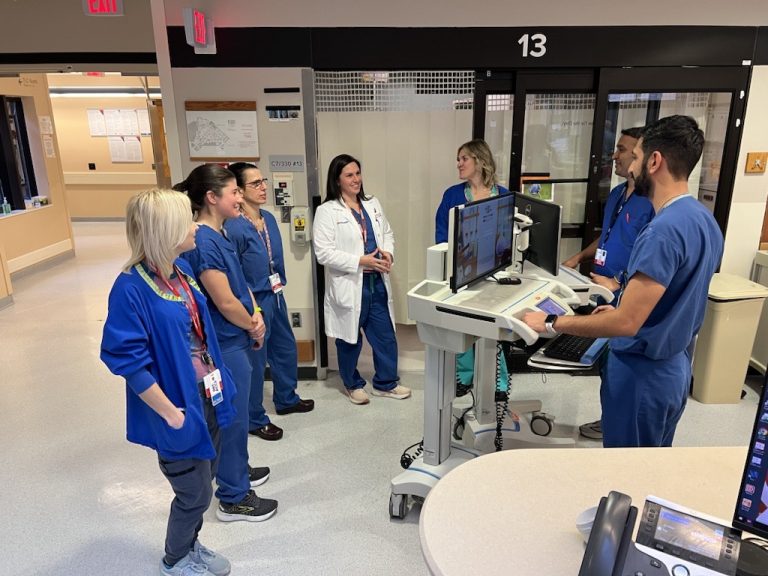
Our Focus on Education
We have multiple education opportunities for fellows:
- Core Surgical Critical Care curriculum
- Faculty experts give lectures on curated topics, chosen to align with topics covered on the SCC board exam
- Journal club – once a month, the SCC fellow discusses an article or articles in an informal setting with SCC faculty, residents, and other critical care fellows.
- Full access to the SCORE curriculum for surgical critical care
- “Meet the Experts” – monthly series with a different theme each month, where our fellow presented challenging cases related to the theme, discussing the clinical management with faculty experts
- Core Acute Care Surgery curriculum
- Regular program didactic lectures
- Access to ACS-dedicated American Association for the Surgery of Trauma (AAST) fellowship lectures such as Journal Clubs and Meet the Mentors
- AAST Educational Modules
- Fellow is provided attendance + travel to an ACS ultrasound course and a national acute care surgery/critical care meeting
- UW Difficult Airway Course
- Departmental Morbidity and Mortality Conferences
Simulation
The UW Health Clinical Simulation Program is a state-of-the-art facility that provides novel programs that deeply enrich the education of the entire health system community, including graduate medical trainees. As an ACS Accredited Comprehensive Education Institute, UW Health and the Clinical Simulation Program provides space, equipment, and program support for innovative multidisciplinary educational opportunities. Laparoscopic surgery, cardiac surgery, ultrasound, endoscopy and endovascular surgery simulation equipment is available. The Fellow also participates in trauma non-technical skill training that is nationally recognized for its innovations in educational methodology.
Ultrasound
The Fellow participates in a formal point-of-care ultrasound curriculum. This curriculum includes a formal course in ultrasound as well as rotation experiences in ultrasound image acquisition and interpretation. The Fellow is expected to develop a portfolio of ultrasound exams and interpretations that are uploaded to the Telexy QPath Point-of-Care Ultrasound archival system and reviewed by faculty. The Fellow is required to complete a minimum of 50 focused transthoracic cardiac echocardiography reviewed examinations prior to graduation. A focused training pathway for the National Board of Echocardiography Critical Care Echocardiography Exam is also provided for fellows with specific interests in critical care echocardiography.
Leadership Development
There are many opportunities for our fellows to gain leadership experience during their training year. This includes but is not limited to:
- Leading the monthly morbidity and mortality conference for SICU.
- Participation in the ICU Quality Improvement Committee and Hospital Critical Care Committee
- Resident educational opportunities, ranging from teaching in the UW Simulation Center to curriculum development
- Function as faculty member during the ACS 2nd year
Learn More
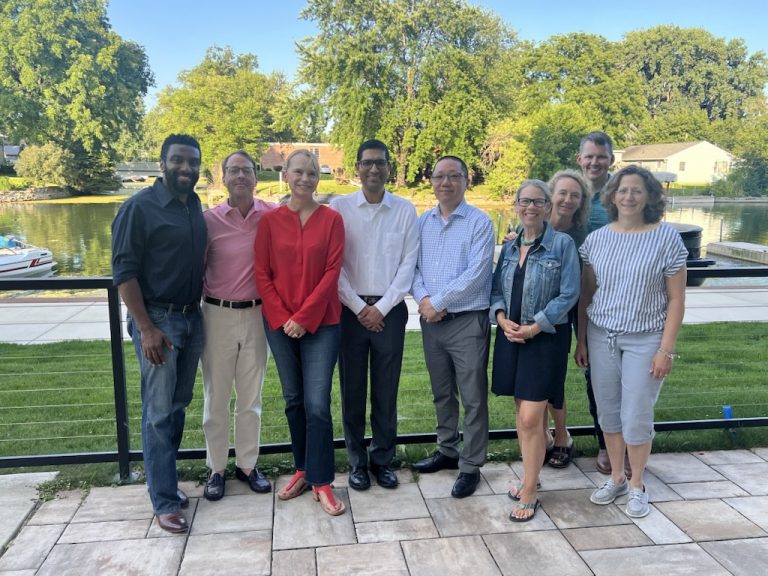
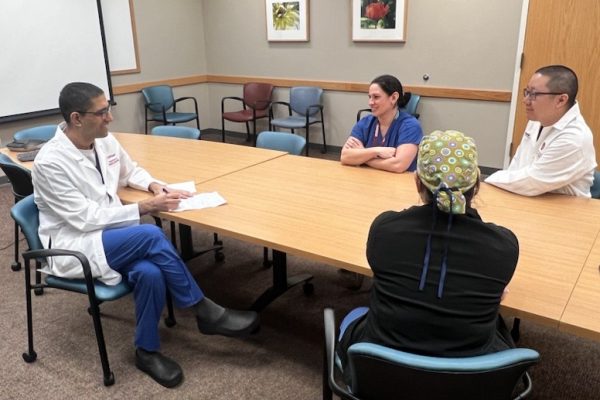
Specialization Pathways
Three specified pathways are available to fellows for their development as surgical leaders. The selection of a pathway will be made by the fellow within the first six months of their first fellowship year.
Research
The Research pathway aims to assist fellows in developing independent research careers. Most fellows who select this track will already have experience in research, so the focus is to continue research productivity and to identify specific areas of study that they will continue as a faculty.
Mentorship is key to this development, and the Fellow is assigned to a specific faculty member within the Department of Surgery with a track record of trainee development. Opportunities are available in Clinical Sciences, Health Services, Learning Sciences, and Basic Sciences. The mentor is identified in the first year of the two-year clinical fellowship.
The Fellow is expected to develop and execute an independent research project within the two-year timeframe. On completion, submission of the project to a national meeting is expected. The Fellow is expected to complete 1 to 2 first author papers. At the end of the training, the Fellow should be prepared to pursue independent research careers and to apply for extramural funding including career development awards. More information about faculty with established laboratories are found here.
Further formal coursework in related topics may be pursued. Formal teaching on grant writing will be provided. In addition, opportunities will be provided for the fellow to participate in external programs such as the Eastern Association for the Surgery of Trauma INVEST-C “Research Hackathon.”
Global Surgery
The Global Surgery pathway aims to develop surgical leaders in global health. The focus is to provide concrete experiences in program development and implementation.
The Fellow will integrate into the UW Global Surgery program during their second year. This includes a global health experience abroad. Depending on the Fellow’s goals and educational needs, this can be up to a 3-month experience. An additional one-month global health elective during the first year is available. These experiences help to develop innovative problem-solving, increase insight in resource utilization, develop hand-on skills, and strengthen leadership capabilities. In addition, the Fellow is expected to learn about the development and implementation of global health programs.
Throughout this pathway, the Fellow will also have the opportunity to pursue international research collaborations and studies through the Department of Surgery Global Health Research Program. Training in applying for and administering international collaborative grants will also be provided.
Systems Management
The Management pathway leverages specialized training opportunities within UW Health and UW-Madison to develop administrative skills necessary for Fellows to become organizational clinical leaders. The goal is to develop future Trauma Medical Directors, Emergency General Surgery Directors, ICU directors, and fellowship program directors.
This pathway follows an apprenticeship model that is divided into two years. In the first year, Fellows are included as unit-based leadership meetings. They act as an assistant to the ICU medical director. A quality improvement or process improvement project under the supervision of the ICU medical director is completed.
During the second year, the Fellow is given the opportunity to embed within the UW Health Trauma Program, Emergency General Surgery Program, or the Surgical Critical Care Fellowship program. They work as assistants to the respective medical directors in order to learn about program operations, regulations, and verification processes. The Fellow develops leadership and business skills needed to succeed in these roles. Formal course work in trauma medical director development, leadership development, and business skill development are available to the Fellow, such as the Trauma Center Association of America Trauma Medical Director Course or the American Association for Physician Leadership Fundamentals of Physician Leadership Series.
Apply
Interested in our Surgical Critical Care and Acute Care Surgery Fellowship Program? Click here to learn how to apply.
Please contact Michaela Gombar with any questions or concerns.
Contact Us
For questions about the Surgical Critical Care and Acute Care Surgery Fellowship, please contact:
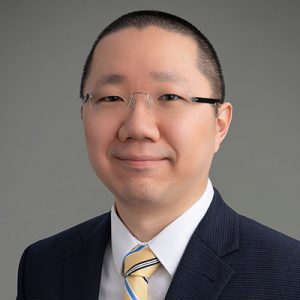
Hee Soo Jung, MD |
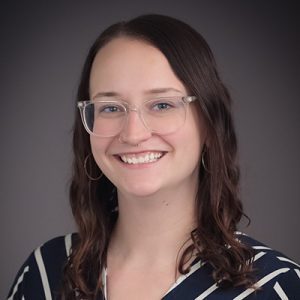
Michaela Gombar |