Social Impact and Belonging
The University of Wisconsin Department of Surgery is dedicated to building a learning and working environment that supports inclusive excellence, promotes psychological safety, and advances the well-being of all faculty, staff, and trainees through intentional policies, programs, and engagement.
Learn more about our Social Impact, Belonging, and Well-Being initiatives
Educational experience
Your educational experience will include a wide-array of educational opportunities outside of the clinical day-to-day learning environment and weekly didactics. Some highlighted and unique opportunities include: clinical simulations, tissue labs, global health practice opportunities, and research.
Clinical Simulation Curriculum (UW Sim Center)
You will have 24 hour access to our renowned Clinical Simulation Center. The Simulation Center can be used to hone in on surgical technical skills (ex. Suture and ultrasound), complete certification courses (ATLS), as well as provide a stage for hands-on simulation curriculum. The Department of Surgery houses interactive simulation curriculums such as: laproscopic skills, FLS, central line, A-line, chest tube placement, blood draws, drain placement, and many more.
UW-Surgery Surgical Skills – Wet (tissue) Labs
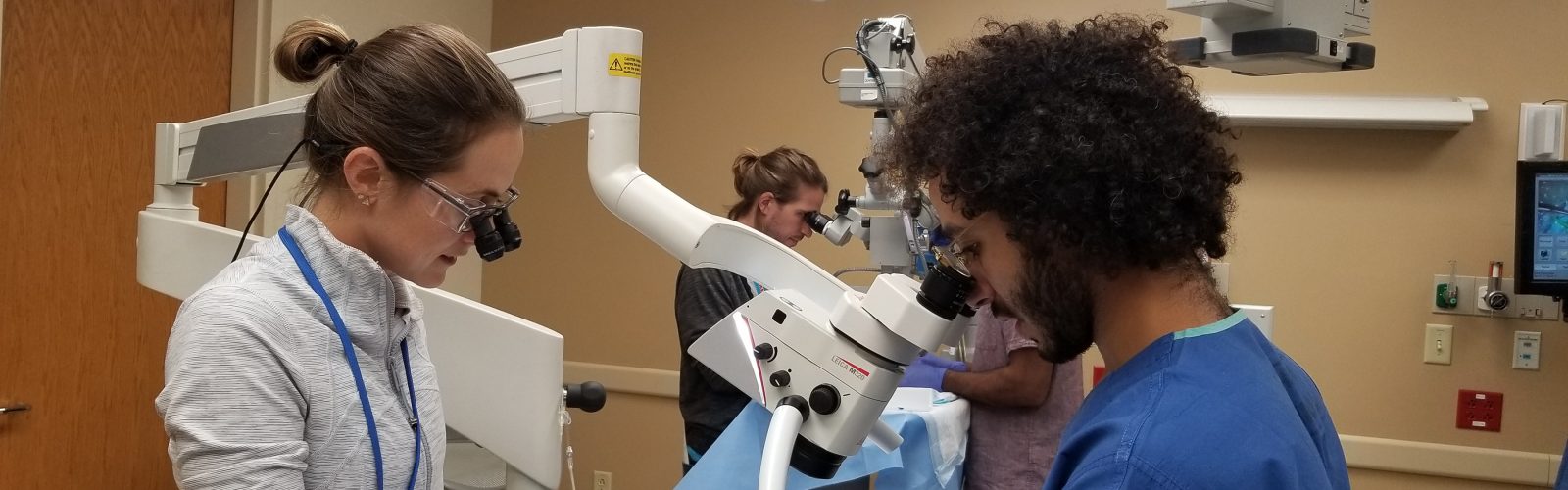
Wet lab simulations are an important aspect of the surgical education curriculum that provides critical hands-on experience. These opportunities might include: Hand sewn and stapled bowel and vascular anastomoses (general & vascular), temporal bone labs (otolaryngology), and facial nerve course (plastics).
Global Health
We provide a wealth of opportunities for surgical residents to gain educational experiences abroad. This allows residents to gain clinical experience in countries around the world and to become problem solvers and leaders across the globe. Each residency program provides opportunities for 2-4 week rotations abroad in their specialty. For more information please visit the global surgery webpage.
Research
As an academic institution, we encourage and promote involvement in surgical, health services or bench science research. Our residencies provide dedicated research time or rotations to collaborate with dedicated faculty in answering important and achievable research questions.
Resources
Hear from one of our general surgery residents, Elle Kalbfell, MD: