Our Goals
- To understand how disruption of the circadian clock contributes to carcinogenesis and a more aggressive cancer phenotype in pancreas cancer.
- To determine how the DNAJB1-PRKACA fusion oncogene drives cancer formation to identify novel therapies for the spectrum of cancers caused by this gene fusion.
Our Projects
We have developed a novel platform to evaluate individual patient tumors (PDAC) and identify which patient PDAC harbors a disrupted circadian clock (BMAL1 suppressed) versus intact circadian clock. Those tumors with a disrupted clock and BMAL1 suppression portend a far worse prognosis. We use patient cancer-derived xenograft models, patient cancer-derived organoids and syngeneic mouse models to understand how BMAL1 silencing and circadian disruption occurs in human PDAC for prognostic and therapeutic avenues.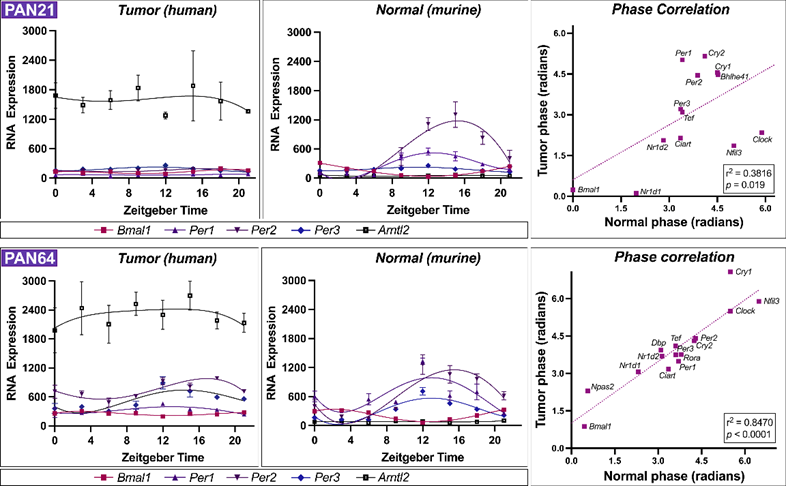
Patient cancer derived xenograft model depicting pancreas cancer with a disrupted clock (PAN21) versus intact clock (PAN64)
We have identified CDK7 as a therapeutic target in DNAJB1-PRKACAdriven cancer. We are using patient cancer-derived models and engineered cell lines to identify top candidate drugs targeting CDK7, and advanced molecular techniques to determine why DNAJB1-PRKACA cancer cells are so susceptible to CDK7 inhibitor therapy. This has led to informed combination therapies that may be applied as a translational approach. We are also evaluating other cancer subtypes that are sensitive to CDK7 inhibitor therapy.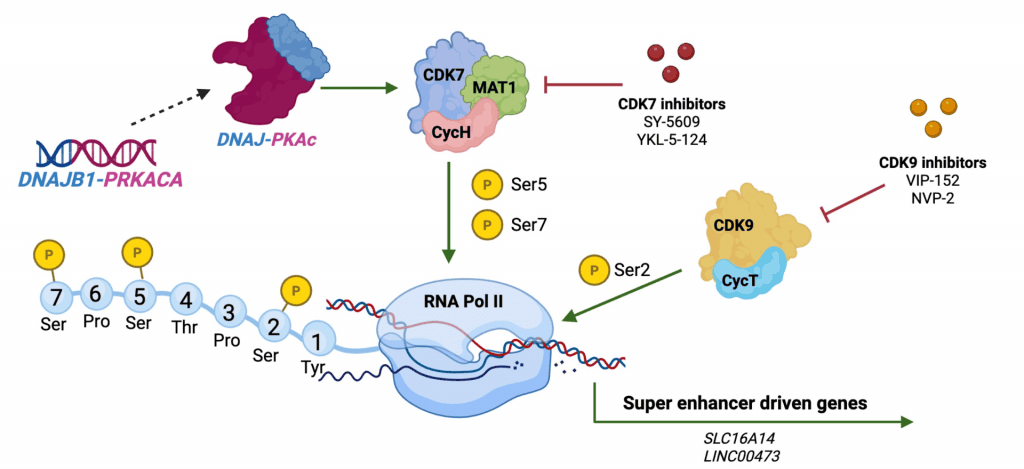
Cyclin-dependent kinase 7 regulates RNA Pol II mediated transcriptional activity in DNAJB1-PRKACA driven cancer
We have constructed a conditional immune competent model of DNAJB1-PRKACA driven carcinoma that mimics human IOPN-associated carcinomas of the pancreas and bile duct. Using this model system, we aim to understand how the DNAJB1-PRKACA transformed cells remodel the tumor microenvironment to yield a permissive, desmoplastic stroma and invasive carcinoma development.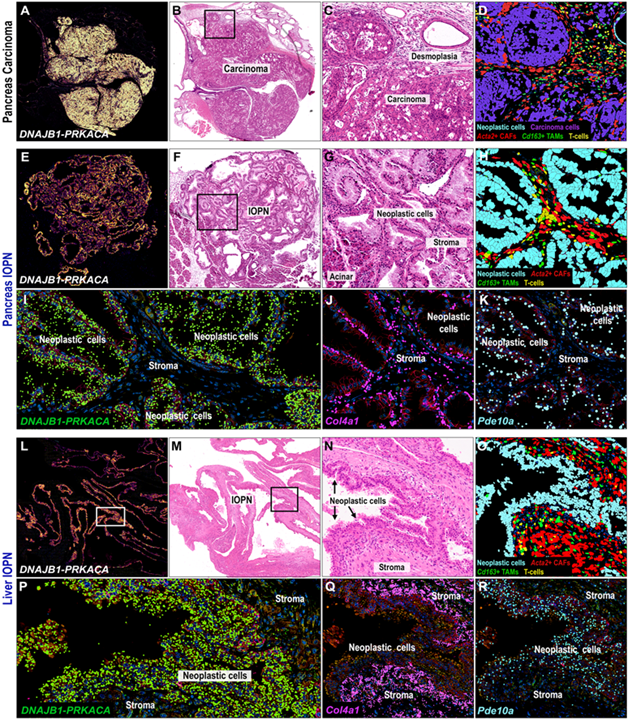
Immune competent mouse model of DNAJB1-PRKACA driven carcinoma mimics human pathology
We have identified the orphan monocarboxylate transporter, SLC16A14, as strongly linked to DNAJB1-PRKACA. SLC16A14 may play a key metabolic role in the cancer cells, and we are working towards understanding the structure of this protein as well as transport substance and function in DNAJB1-PRKACA expressing cells (i.e., de-orphanization).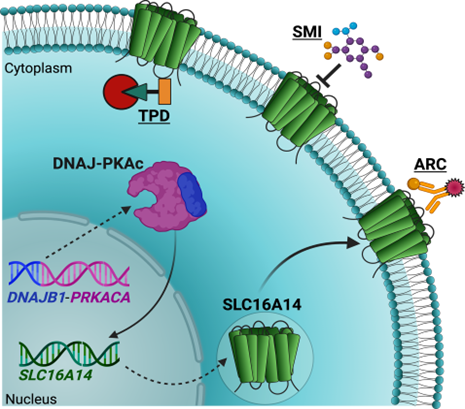
SLC16A14 is a cell-autonomous plasma membrane transporter in DNAJB1-PRKACA driven cancer
Make a Donation
Support the Dr. Ronnekleiv-Kelly Research Lab through the UW-Madison Department of Surgery. Philanthropic gifts make a tremendous difference in advancing groundbreaking research.
Contact Dr. Ronnekleiv-Kelly

Sean Ronnekleiv-Kelly, MD, FACS
Assistant Professor
ronnekleiv-kelly@surgery.wisc.edu
(608) 262-2025
BX 7375
K4/757 CSC
Madison, WI 53792