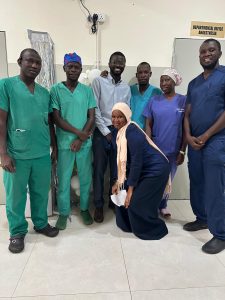
I completed my global surgery elective at Edward Francis Small Teaching Hospital (EFSTH) in Banjul, The Gambia. It is the only referral center and Level I trauma center in the country with intensive care unit beds. The four weeks I spent with the general surgery team provided me with new perspectives on what it is like to practice surgery in a low-income country.
During my first week, I spent most of my time in the operating room. We performed many procedures, including emergent, re-operative, and elective cases, as well as upper endoscopies. Most emergency abdominal cases were due to gastroduodenal perforations, all of which were managed with laparotomy. The re-operative cases were understandably challenging because of significant inflammation and poor tissue quality, as many patients had gone without nutritional support for one to two weeks following their initial operation. I was also exposed to a bowel perforation secondary to obstruction from disseminated tuberculosis (TB). This pathology, more commonly encountered in low-income countries, demonstrated the aggressive nature of untreated TB.
Inguinal hernia repair in The Gambia is most commonly performed using an open approach. However, I was fortunate to witness the first laparoscopic inguinal hernia repair in the country. The procedure was performed by a surgeon who traveled three hours from the neighboring country of Senegal on the morning of the operation. Despite encountering a flat tire during the journey, which delayed the case, the surgeon arrived in Banjul and completed the surgery in under an hour and a half. This marked a significant milestone in the growth of the surgery department and was met with great excitement from residents and medical students, many of whom were seeing a laparoscopic inguinal hernia repair for the first time.
In addition to my time in the operating room, I was involved in educational activities with House Officers (the equivalent of interns) who were beginning their general surgery rotation. We reviewed common conditions managed by general surgeons, procedural skills such as chest tube and Foley catheter placement, and trauma and burn assessment. I also participated in laparoscopic skills training with Medical Officers and residents. The enthusiasm among the trainees was evident as they worked to develop and master laparoscopic skills.
There was a significant shortage of anesthesia providers in the hospital. As a result, most procedures, including esophagogastroduodenoscopy, are performed without sedation. This is not only a testament to the resilience of patients, but also reflects the challenges faced by a healthcare system plagued by limited resources and underfunding.
My four weeks at EFSTH were an incredible experience, ranging from exposure to diverse pathologies—including advanced breast cancer cases in clinic—to meaningful educational engagement with trainees. This elective provided firsthand insight into the challenges faced by surgeons in low-income countries. Overall, I left deeply inspired and more committed to continued involvement in global surgery work.
Dr. Dawda Jawara is a general surgery resident.