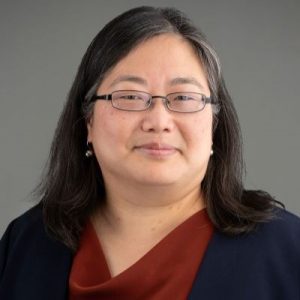
Division of Transplantation Assistant Professor Carrie Thiessen, MD, PhD is fascinated by the many ethical issues surrounding organ transplantation and has dedicated her research lab to examining these issues within the complex realities of clinical care and patient interactions. To support her efforts in this area, Thiessen was recently named as a Greenwall Foundation Faculty Scholar in Bioethics. The program will provide her with $242,000 over the next 3 years to delve into an ethically questionable practice in the distribution of organs from deceased donors known as allocation out-of-sequence (AOOS).
“Under normal circumstances, a donated organ is offered to the patient who is at the top of the national transplant list. But in AOOS, an organ is offered to a local transplant center for any patient on their transplant list, regardless of where that patient sits on the national priority list,” explained Thiessen. “In essence, AOOS bypasses the national transplant registry.”
AOOS has historically been reserved for rare and urgent situations, but the practice became more common after 2020 and peaked in 2025, with 20% of kidneys from deceased donors placed via AOOS in 2024. This led to widespread critiques that the practice is unfair and undermines trust in the transplant system. Thiessen plans to analyze the ethics behind the practice of AOOS with the goal of answering three questions: Why are so many organs placed via AOOS? How do these organizations and individuals conceptualize their ethical obligations with respect to organ allocation? How can we modify the allocation system to mitigate conflicts between equity, efficiency, utility, and the perceived ethical obligations of the involved parties?
“The issues surrounding organ allocation and AOOS are complex. Given the Organ Procurement and Transplantation Network’s ongoing work to refine national policy to ensure that organ allocation is fair and transparent, this research is well-timed. What we learn will facilitate the efficient placement of organs, mitigate the need for AOOS, restore equity in organ allocation, and ultimately improve patient welfare,” said Thiessen.