At the University of Wisconsin Department of Surgery we are at the forefront of innovation in trainee education. We believe that sustained research engagement throughout residency is critical for the career development and success of academic surgeon leaders who are clinically proficient and prepared to pursue extramural research funding within academic settings.
In order to achieve that, beginning with the 2027-28 recruitment cycle (residents who will match in March, 2028) we are establishing a Surgeon Scientist Track, which matches two residents each year. The program will consist of five years of clinical training, with integrated research time in years 2-4, and two years of dedicated research development distributed over the final three years of residency.
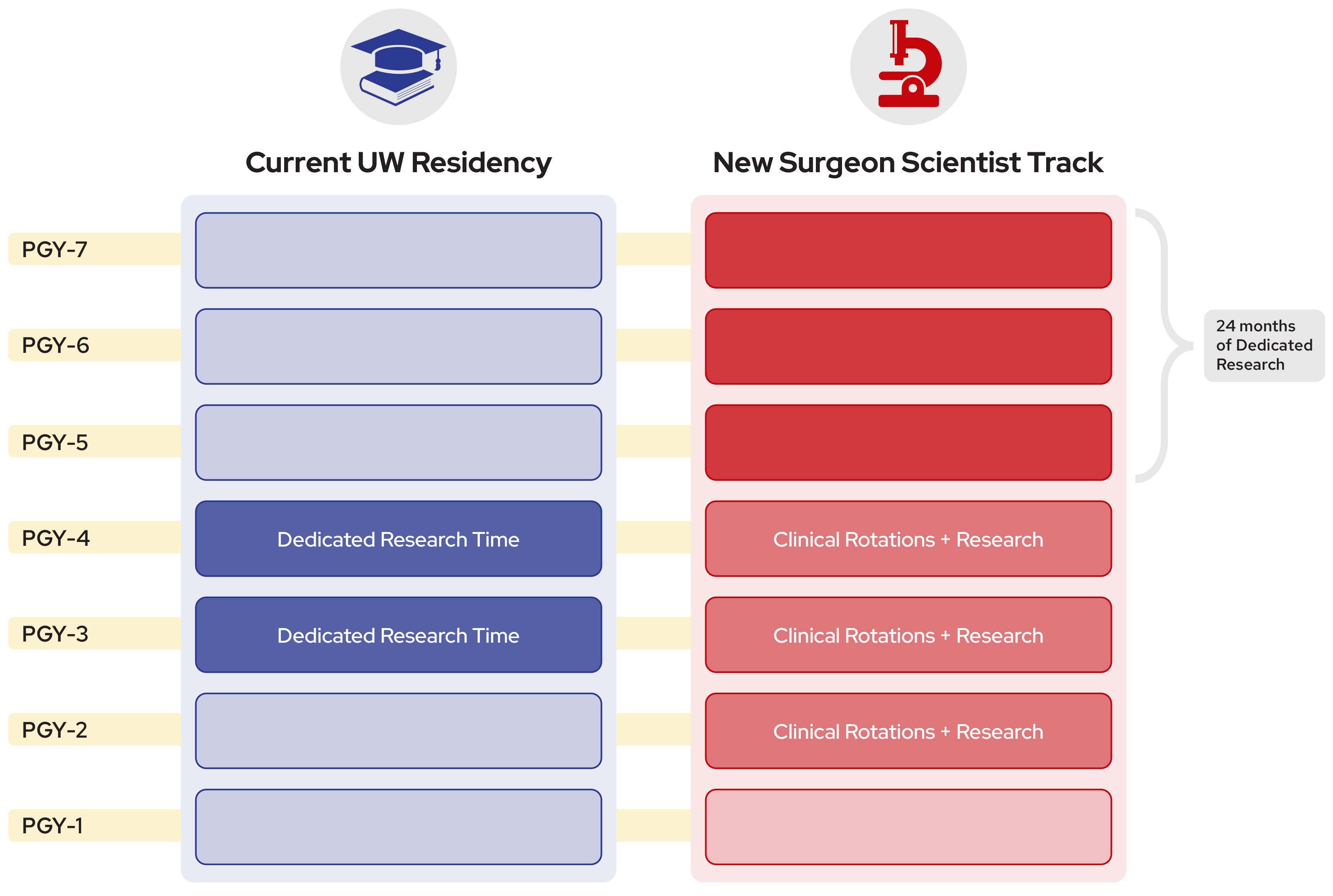 The innovation of our new surgeon Scientist Track centers on early integrations of research time within clinical rotations combined with dedicated research time later in the program to ensure research work is timely and applicable for early faculty career development award applications. This timeline and structure enables residents to be better equipped to transfer their research work and skills into fellowship and faculty roles after graduation.
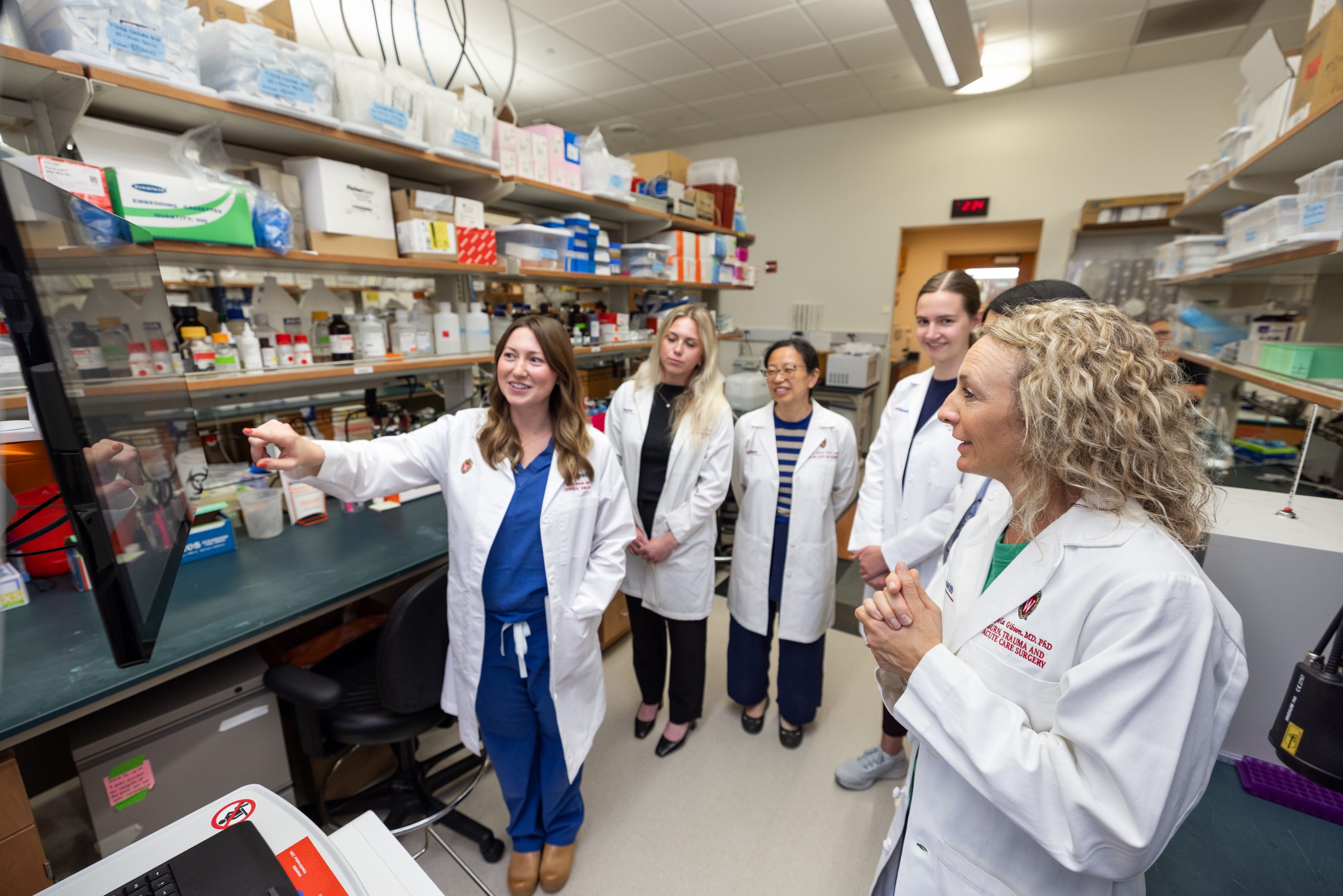
Residents will be able to take advantage of the University of Wisconsin’s and Department of Surgery’s world-class research opportunities. The Department and University have a diverse portfolio of funded research opportunities for surgical research, including: basic science and translational, health services/outcomes, biomedical engineering, and surgical education. During the research time, residents will complete an individualized research-training curriculum designed to develop the knowledge and skills for your future scholarly pursuits. In addition to working with a faculty research mentor (usually within the Department of Surgery), residents will be trained in experimental design, manuscript writing, grant writing, biostatistics, and many other pertinent topics. Each year our residents typically publish multiple first-author manuscripts and present at national conferences.
For more information contact Sean Ronnekleiv-Kelly, MD, associate professor in the Division of Surgical Oncology and Surgeon Scientist Track Director.
General Surgery Residency
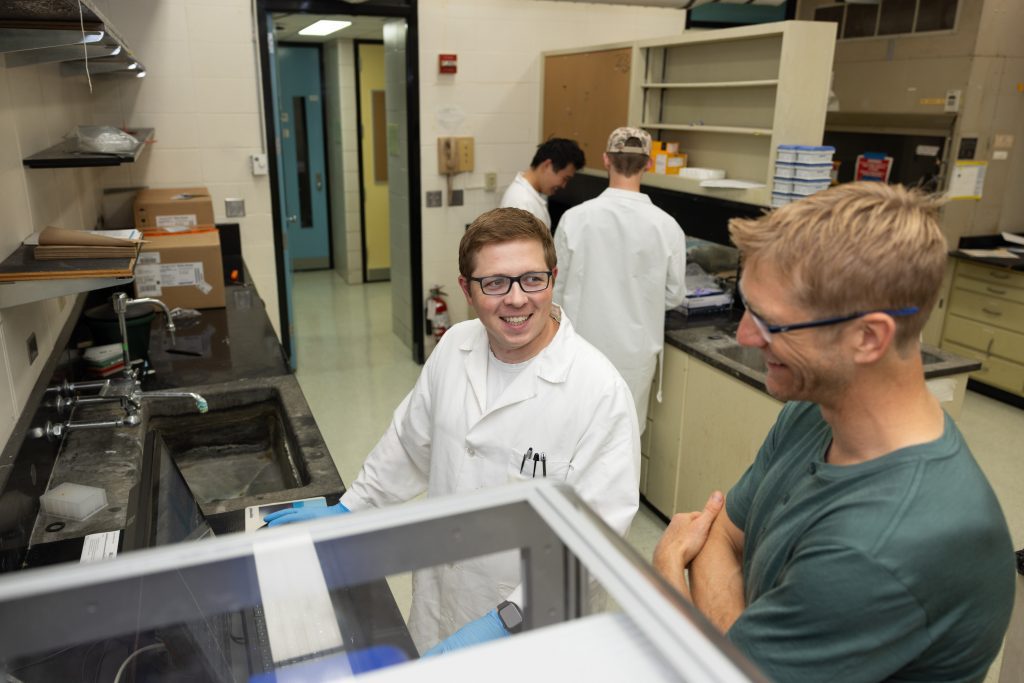
“Wanting to do academic surgery and have a basic science lab, it’s important to have time during training to do research, to keep a good publication record, to present at conferences, and to learn how to balance that lifestyle with surgery.“
– Dr. Patrick Carney,
general surgery resident
in the Ronnekleiv-Kelly Lab
Opportunities for Success: Residents Thrive During Research Years
View this profile on Instagram