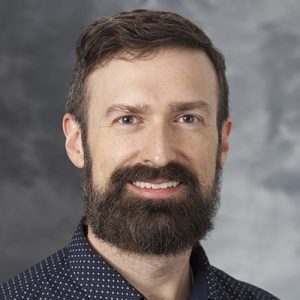
Director of the UW Humanized Mouse Core and Division of Transplantation Assistant Professor Matthew E. Brown, PhD is an expert on developing and studying animal models that can replicate the human immune system. As a graduate student, he developed a humanized mouse called the NeoThy, which relies on human tissue that is discarded as medical waste; namely, blood that is taken from the umbilical cord after birth and thymus tissue taken from corrective cardiac surgeries performed on infants under one year of age. These tissues are then transplanted into immunodeficient mice, which allows the mice to develop a human immune system. The NeoThy has become a widely used model in numerous scientific applications – from transplantation and regenerative medicine to infectious disease – to study human immune responses to interventions in an in vivo preclinical model.
However, mouse models are limited by size and physiologic constraints that can make it hard to translate to human models. With a new Pilot Award from the UW Institute for Clinical and Translational Research (ICTR) and co-funding from the UW Stem Cell and Regenerative Medicine Center, Brown and Nathan Welham, PhD, Professor in the Department of Otolaryngology-Head and Neck Surgery, aim to develop a next-generation immunodeficient rat model that, like the NeoThy mouse, is capable of tolerating engraftment of human tissue and growing a humanized immune system. Once the new humanized rat model has been developed, Brown and Welham will then establish its utility for modeling human immune responses in vivo.
“Humanized rats offer larger blood and tissue volumes, enhanced surgical access, and more human-like physiology, making them a potentially superior model for the preclinical study of human immune responses than the physiologically smaller mouse model,” explained Brown. “The problem is that current rat models are dependent on chemotherapy or total body radiation to wipe out the rat immune system to ensure it doesn’t reject transplanted human tissues. Both of these treatments are highly toxic and result in incomplete reconstitution of human immunity.”
Humanized animal models are a critical tool in immunology-based studies. While researchers could study the animal’s immune system directly, this system is not representative of human biology and may not reflect how the human immune system would respond. In contrast, ethical issues may prevent many of these studies from being carried out with human subjects because the studies are too preliminary in nature; animal studies need to be conducted first to safely evaluate the safety, toxicity, and overall effectiveness of interventions in a living, complex organism before testing them with humans.
“The results of this study have the potential to yield an entirely new animal model that can be used to accelerate work in multiple areas of translational immunology research, including but not limited to the development and testing of stem cell-enabled regenerative medicine therapies, fibrosis and tissue repair, and much more,” said Brown. “We’re incredibly grateful to ICTR and the Stem Cell and Regenerative Medicine Center for supporting this research, which has long-term potential to advance patient health by better enabling translational research across multiple immunology-relevant fields.”